Tuesday, April 16, 2013

Learning Log 14


Chapter 7 – The Café Book
Reflect on the following statement found on page 107, “Why not start grouping kids together by strategy need rather than reading level?”  What would this look like?

The teacher would assess each student’s reading to determine what strategies will enable the child to be a more successful reader (Boushey & Moser, 2009).  The groups will be comprised of students with varying reading levels, but they are grouped together based on the strategy need that they have.  The groups will change as the students’ needs change. 

What is the true meaning of “flexible” groups?  What does it look like?  How does it compare to your current practice?

“Flexible” groups means that groups will be based on student needs instead of ability levels (Boushey & Moser, 2009).  The groups may contain varying abilities in reading; however, the strategy needs that each student needs will decide the composition of the groups.  In a lot of classrooms, students are grouped according to their ability levels, which are not necessarily meeting their instructional needs.
Think of a time you have been “grouped” and it was not a good fit for you.  How did you feel?  Were you motivated to do your best or were you discouraged?

In one of my college courses, the class was required to participate in learning teams.  The first team was great as everyone seemed to have similar goals and understandings of the requirements of the assignment.  The second team that I was on was less than optimal as two of us did most of the work, and the other team members did not understand the objective of the assignment and were not at the same ability level.  I feel like I was cheated out of a beneficial learning experience because of this.  I was discouraged; however, I did not want to receive a low grade for the assignment.
View figure 7.2 (p. 112; you will notice it is very similar to the form you viewed on p. 151).  Using this form, read a few sample strategy groups (beginning on p. 116) and highlight the elements of coaching towards a target that you find.  Then, use a strategy group form to practice filling out what you would include when coaching a small group.

The sample strategy group that I highlighted was the last one, Expand Vocabulary:  Use Word Parts to Determine the Meaning of Words (Fifth Grade).  The teacher has checked her calendar to determine which group she is working with at that time.  Before meeting with the group, she looks at each of their assessments to select a strategy to instruct them on that will aid them toward achieving their goals.  The teacher has the students record the strategy in their notebooks while she observes them do this.  Next, she begins the lesson by having students examine a newspaper with her in which they find words for their roots and affixes to develop meaning.  She has the students practice the strategy while she observes as this will let her know if the students understand the strategy or require reteaching.  She plans to meet with the group the next day to check their understanding of the strategy, and she ends the group lesson by providing them with encouragement and positive feedback.
When coaching a small group, I would check my calendar, and then I would examine my students’ assessments to determine which strategy to teach them that will meet their needs.  I would then quietly observe them as they are reading before the group meets.  Next, I would bring the group together and begin the lesson, followed by providing my students with the opportunity to practice under my guidance.  At the end of the lesson, I would plan for our next meeting time and supply them with encouragement. 
How has reading CAFÉ affected the way you think about literacy instruction?
Reading CAFÉ has provided me with a clearer picture on how I can differentiate reading instruction in my classroom.  I can screen my students at the beginning of the school year and design an instructional program that will help to meet their needs.  This is important for all of my students, but it will be crucial for my special needs students.  I also like the assessment piece as it can aid me in providing consistency in assessing and tracking the data for my students.
 
Reference
Boushey, G. & Moser, J. (2009). The café book. Portland, Maine: Stenhouse Publishers.

Saturday, March 30, 2013

Learning Log 13


Chapter 6 – The Café Book

Reflect on your current whole-group instruction time.  How much of your day will be spent teaching whole group?  How long do you think one lesson is from start to finish?  How much of the lesson will you be teaching and how much of the lesson are students doing?

Approximately a quarter to half of my day will be spent teaching whole group.  One of my lessons is about fifty minutes from start to finish.  I will be teaching the first fifteen to twenty minutes of the lesson and the students will be doing the rest of the lesson with my guidance.

Whole group CAFÉ lessons are driven by assessments, one-on-one conferring, and small-group observations (p. 89).  The goal is to plan whole-group lessons around skills and strategies that a majority of our students need assistance with.  What strategies do you find will be most beneficial for whole-group instruction in your classroom?

The strategies that find will be the most beneficial for whole-group instruction in my classroom are:  check for understanding, back up and reread, cross checking, reread text, tune into interesting words, and make a picture or image.  The check for understanding, the make a picture or image, and the back up and reread strategies will assist my students in developing better comprehension in the texts that they read now and through the years to come.  Cross checking will help them to working on gaining increased accuracy in their reading.  Students will benefit from reread text as it will aid them in achieving more fluency.  Vocabulary development can be increased by the tune into interesting words strategy as students look for words that they do not know, and they use context clues to find meaning for the word, which they will record in a journal and provide a picture to help them to remember the meaning of the word.   

Review the whole-class lesson elements (p. 95-97).  How can you integrate these elements into your future teaching practice?  What adaptations need to be made?

The elements for whole-group instruction that the authors provide are:  identify what will be taught, teach the strategy, have students practice with partners, select a student to record and illustrate the strategy to be placed on the CAFÉ menu, review the strategy, encourage practice during independent reading, post the strategy after independent practice, and connect new strategies with the menu continually (Boushey & Moser, 2009).  I think these elements will be central to my literacy instruction, and I want to investigate the Daily Five that the authors have created as both this method and CAFÉ will help me to provide the best literacy instruction to my students that I possibly can.  Adaptations that I would need to make will depend upon where I am teaching and the curriculum design that is in place there. 

How has reading CAFÉ affected the way you think about literacy instruction?

After reading CAFÉ, I now realize how literacy instruction needs to be comprised of authentic learning activities, tailoring instruction to individual needs is crucial, and providing whole-group and small-group instruction that will be beneficial to all.  I have often wondered before reading CAFÉ how I would be able to provide literacy instruction and assessing literacy for my students as there is only so much time in the school day.  CAFÉ provides a way for teachers to assess students as often as needed for each, and it offers me with a way to keep accurate records that will help me in keeping up those records.

Reference

Boushey, G. & Moser, J. (2009). The café book. Portland, Maine: Stenhouse Publishers.


Sunday, March 24, 2013

Learning Log 12


Chapter 5 – The Café Book

This chapter provides nine examples of conferences from different goals at different levels.  Using p. 151 as a guide read each scenario and see if you are able to find the various elements in each conference as Gail and Joan confer with students and “coach towards a target.”  Discuss each element to help you in understanding the whole picture.
The teacher, Gail, checks the calendar for appointments with students, and then they select one of the students, Sevilya in this case, who are scheduled for that day.  Gail peruses her notes from the previous conference with Sevilya to familiarize herself with the Sevilya’s strengths and the strategy focus from last time.  Gail talks with Sevilya about her strengths and the goal in her case is comprehension.  Sevilya is asked to read while Gail listens in so as to observe whether Sevilya is using the strategy that they learned during the last conference, which will be recorded on Sevilya’s conference sheet.  Gail teaches and reinforces the Check for Understanding strategy to Sevilya; she explains the strategy first, then she models it while thinking aloud and offering advice.  She then practices the strategy with Sevilya, who will practice it alone with Gail listening in.  Gail and Sevilya discuss the next step, and Gail writes that on her planning sheet.  The conference ends with Gail asking Sevilya to repeat her strengths, goal, and strategy to work on, and she offers Sevilya words of encouragement.

A few of the conference examples in this chapter provide a picture of the conferring form after the conference is over (figures 5.1-5.4).  Select and example that does not have a form pictured, and then practice on a form as though you were the teacher in the example.  Write down what you would say in dialogue form.
“Hello, Inna.  Do you remember what your strengths are as a reader?”

“I notice that you can read every word and that you can read with expression without pausing to figure a word out.”

“Do you remember what your reading goal is?”
“Your reading goal is comprehension.  It means that you understand what you read.  The strategy that I will be teaching you is called Check for Understanding.  Let me show you how this strategy works.”

“I am going to read a few sentences, and then I am going to talk about what I just read.”
“Now, I am going to have you read the next few sentences, and I want you to stop and ask yourself, ‘Who and what?  Who is it about?  What happened?’”

“Watch me while I model Checking for Understanding after I read the next few sentences.  Who is the author talking about?  What happened?  Now, you try it, Inna.”
“Great, Inna.  I want you to remind me of your goal.”

“Okay, I would like for you to practice the Check for Understanding strategy in your reading today.  I will check back with you tomorrow, and you can show me the passages that you read and demonstrate the strategy for me then.”

Reference
Boushey, G. & Moser, J. (2009). The café book. Portland, Maine: Stenhouse Publishers.

Tuesday, March 5, 2013

Learning Log 11


Chapter 4 – The Café Book

Prior to reading Chapter Four, think about your idea of conferencing with children in the near future.  Write down:  What do you envision the room to look like, feel like, and sound like?  What concerns or questions do you have?  Then, read Chapter Four and revisit your initial thoughts.  Has your thinking changed?  What questions do you still have?

I envision my classroom to look like the students are working toward their reading and writing goals.  My classroom feels like a fun, productive working environment.  It sounds like the students are reading to each other and reading to themselves; they are working towards their reading goals.  I am concerned with making sure that everyone is working diligently in the classroom as I am conferencing with individual students:  What is the best way to ensure this?  How do I keep the rest of the class focused?

I do not believe that my thinking has changed much; however, I am still concerned with keeping my other students on task when I am conferring with individuals.

Chapter Four presents the seven elements of successful conferences (p. 57-67).  Read and reflect on this section, use p. 151 as a guide.  Grab your notebook and practice conferring with another person/child.  Reflect on the conferences you held.  How long did each conference take?  Did you complete all seven steps?  What did you find most difficult?  How do you see this working in your daily routine?

Step 1:  Check the Calendar for Appointments
The teacher checks the Conferring Notebook for appointments with students.  The teacher is also able to check the Keeping Track form to see that he/she is meeting with students consistently based on their needs.  Some children will have conferences more often than others based on their present level (Boushey & Moser, 2009).

Step 2:  Prepare for the Conference (30 seconds)
The teacher needs to prepare for the conference when they decide upon which child they will meet with.  He/she does this by quickly scanning notes for the following information:  Their teaching point and the follow-up for students between conferences.  By preparing, the teacher will be able to focus on the student.

Step 3:  Observe Child and Listen to Reading (1 minute)
The teacher asks the student to read so that they may listen to see if the student is employing the strategies that were previously taught and what they are doing well with the strategies.  The student describes his/herself as a reader.

Step 4:  Reinforce and Teach (1 minute)
The teacher shares his/her observations with the student, then they teach or reinforce the strategy the appropriate strategy through explicit explanation, modeling, thinking aloud, and offering advice (Boushey & Moser, 2009).

Step 5:  Practice the Strategy (1 minute)
The student is asked to practice the strategy with the teacher, so the teacher will be able to correct misconceptions that the student may have made about the strategy.

Step 6:  Plan (30 seconds)
The teacher and student make decisions together on the next step for the student to take, which will be recorded on the coaching sheet.

Step 7:  Encourage (15 seconds)
The student needs to express what the goal is, and the teacher provides the student with encouragement to keep them positive about practicing the strategy.

Each conference that I conducted lasted about three and a half to four minutes.  I completed most of the steps as it was difficult in having very little information to start with.  I found deciding on a strategy to practice or reinforce to be the most difficult because of the lack of information that I had to go on.  I see this as a way to keep track of my anecdotal notes for each students and as a guide in planning where students need to go.

Reference

Boushey, G. & Moser, J. (2009). The café book. Portland, Maine: Stenhouse Publishers.

Saturday, February 16, 2013

Learning Log 10


Chapter 3 – The Café Book

Establishing the Literacy Café in the classroom is the topic that Boushey and Moser discuss in this chapter.  Often, before the school year starts, teachers begin their preparations for the Café by creating the bulletin board (Literacy Café Menu) and selecting which strategies to introduce the students to first.  The Menu contains a column with the headings for the types of Café strategies:  Comprehension, Accuracy, Fluency, and Expand Vocabulary.  Under these headings, there are brief definitions:  Comprehension-“I understand what I read;” Accuracy-“I can read the words;” Fluency-“I can read accurately, with expression, and understand what I read;” and Expand Vocabulary-“I know, find, and use interesting words (Boushey & Moser, 2009).”  The menu remains empty of strategies until the first day of school when a strategy will be placed on it after it has been introduced to the students, usually during the first read-aloud, and then gradually add more strategies during whole-class lessons for the rest of the first week of school.  The Café system then moves into individual conferences where students will be assessed in order to tailor their reading instruction using seven steps:  “assess the individual student, discuss findings with students, set goal and identify strategies with student, student declares goal on menu and in notebook, teacher fills out individual Reading Conference form, teacher fills out Strategy Groups, and instruction (Boushey & Moser, 2009).” 

I like how the authors lay out a step-by-step plan for setting up and instructing students on how to use the Literacy Café Menu.  As a future educator, it will be important for me to be able to instruct my students in making use of the tools that are available to them to enable them to develop higher functioning cognitive skills in order for them to become successful readers and learners.      

Reference

Boushey, G. & Moser, J. (2009). The café book. Portland, Maine: Stenhouse Publishers.

Sunday, February 3, 2013

Learning Log 9


Chapter 2 -- The Cafe Book

Boushey and Moser, the authors of the Café Book, inform the reader of their trials and tribulations of maintaining student records, especially anecdotal notes.  They experimented with different organization strategies over many years before settling for their current method of keeping student records:  the Conferring Notebook.  They also make reference to this notebook as their “pensieve,” and as such, the notebook should be a reflection of the personality of the teacher that is using it, which will make it easy to identify what it is and who belongs to.  This notebook contains assessment data, daily observations, and their teaching and learning (Boushey & Moser, 2009).  The notebook has two sections:  teacher notes and student individualized progress.  The teacher notes section contains a calendar for making appointments with each student, a form for keeping track of meetings with each student, and a strategy groups form for creating student instructional groups that are flexible and have similar goals.  Each student has their own subsection in Section 2 containing a CAFÉ Menu, a Reading Conference form, and a Writing Conference form for each of the students.  The teachers can keep track of their students’ strengths, weaknesses, and goals at the top of the Reading and Writing Conference forms as well. 

The organization of the Conferring Notebook appears to be straightforward, and I can see where it will be a crucial piece to literacy instruction in the classroom and in showing proof of learning when asked by administration and parents as the information is in one place.  Organization is an important part of being a professional and in classroom management because if we want our students to develop organizational skills, then we must model it for them.

Reference

Boushey, G. & Moser, J. (2009). The café book. Portland, Maine: Stenhouse Publishers.


Tuesday, January 22, 2013

Learning Log 8

Café Book – Chapter 1

1.  How would you differentiate reading instruction for your students to ensure each child is receiving instruction at their level?

Before I can differentiate reading instruction for my students, I will need to assess their reading as this will inform me of their strengths and areas where they need more assistance.  The next step is to set up the Daily Five in a literacy workshop that will provide students with five different tasks that they can work on independently allowing me to work with small groups.  The five tasks of the Daily Five are:  reading to self, reading to someone else, writing, word work, and listening to reading.  Using this program will permit me to conduct periodic assessments on my students to check their progress in their literacy skills development (Boushey & Moser, 2009).
 
2.  How will you use reading assessments to inform instruction and set student goals?

I will use the data that I glean from reading assessments to determine my students’ strengths and weaknesses, which will help me in designing the instructional program and setting goals for my students (Boushey & Moser, 2009).  I will be able to use those areas where my students need more assistance to set up whole group and small-group instruction.  I will also need to conduct individual conferences with my students periodically to check their progress and to check if their goals are being met or not.
 
3.  The chapter highlights the core elements of the CAFÉ system:  the conferring notebook, individual conferences, small-group instruction, and purposeful whole group instruction.  How do you see these core elements making up a reading block in your future classroom?

I see myself using the conferring notebook in my classroom to keep my records organized and up-to-date for assessing my students reading skills.  The individual conferences will allow for me to have time to assess each of my students, provide individual instruction, to establish goals for the student, and to monitor progress.  I will use the small-group instruction element as an instruction time for those students who are experiencing similar difficulties.  I will provide whole group instruction during this block of the school day for the needs that present for the majority of the class (Boushey & Moser, 2009).
 
4.  Good-fit books are essential to productive independent reading.  What can you do to get good-fit books in the hands of your students?  How do you define a “good-fit” book?

Good-fit books are books that a student can read, which means that the books are at the students reading level and able to be read independently (Boushey & Moser, 2009).  I can make selections of books that will be good-fit books based on the data that I gather from assessing my students.
 
5.  The end of chapter one discusses the concept of instructional fairness.  What does instructional fairness mean to you?

Instructional fairness means that reading instruction is tailored to each students needs (Boushey & Moser, 2009).  Students who are at a higher reading level do more student-directed work, and struggling students receive more individualized and small-group instruction in order to meet their needs.
 
Reference
Boushey, G. & Moser, J. (2009). The café book. Portland, Maine: Stenhouse Publishers.

Sunday, November 4, 2012

Learning Log 7

I think that a lot of teachers have the same worries about their students who move on in their academic careers as I know that I would if I were in her situation.  It just illustrates how important it is for teachers to get to know their students' reading likes and dislikes as well as their reading habits when they walk into the classroom in the fall.  This can easily be done through reading questionnaires, and then teachers will know which students are motivated readers and which ones are not and can plan accordingly.  I think that one of the worst things that a teacher can do is put the students back at square one instead of getting familiar with their students.  If we want students to become lifelong readers, then we need to keep them motivated by offering them choices in their reading material even if we may not think that they are reading classical literature.  I know that this is not an easy feat in our education system that is focused on standardized testing, and that it may seem easier to tailor reading instruction to the tests.  I think this approach of teaching to the test sets students up to become alliterate readers when they finish their academic careers.  I would like to point out that the author, who does not teach to the test, has had her students' test scores come out very high.  I think that the high test scores that her students have is because of the fact that she puts so much emphasis on reading for the joy of reading that it has a longer lasting impact on her students becoming lifelong readers.  I think that independent reading is so important to a student's academic success that I will try to find those wasted minutes in the classroom, and I will have my students use those times to read independently with books that interest them.

Learning Log 6


One thing that I found very interesting from this reading that I can actually compare to what I have experienced is the reading logs that are used to record the amount of minutes that a student has read. When I was in school, the teachers did not require students to record the amount of time that they spent reading outside of school. I read just because I liked to read; however, I also had reading role models at home as both of my parents were avid readers. My kids, on the other hand, have had to record their reading minutes at home since they started school. They had the Book-It reading program in which they get a free personal pizza in the early grades (My youngest one still has this program, and he is the only one who it has really mattered.). When my two oldest children entered fifth grade, they had to record their minutes for a letter grade in home reading. This was not an incentive for either one of them to record their reading time. My daughter, however, was reading all the time, wherever she found an opportunity to read. I remember her teachers constantly calling me telling me that she did not turn in her reading minutes, and I would tell them that she was reading all the time. At her eighth grade graduation, the communication arts teacher handed out awards to the students for the amount of minutes that they read throughout the school year. My daughter had only recorded around 3000 minutes, but I know that she read at least double that if not more. She was (and still is) a motivated reader who did not feel that she had to justify it; she knew that her dad and I were aware of her reading passion. My oldest son has not been very motivated to read, and it is not from a lack of trying on our part. I am an avid reader, and I have always made sure that there are books in the house as well as looking through the book orders with my children and buying books for them out of those book orders.

Wednesday, October 31, 2012

Learning Log 5

I remember when I was in school as a child that my teachers made the selections of the books that we were going to read for the year.  It was not common practice at the time to be able to disagree with the teachers, and I do not believe that teachers were completely honest with me about their reading habits or preferences.  I do not remember seeing very many of them that were reading for their own enjoyment.  In other words, I do not remember them being reading role models.  My reading role models were my parents, who were forever reading when they were not at work or had spare time after taking care of things around the house.  I do not understand how so many teachers can expect their students to develop a passion for reading when they do not have that passion themselves.  The teachers are the leaders of their classrooms, and as such, they must be reading role models for the students.  In order to fulfill this role, teachers need to reflect on what reading means to them, and it is critical that teachers communicate with their students on their own personal reading struggles.  This will illustrate to the students that they are not the only ones in the classroom that have struggles.  It will also show students that this type of a classroom is safe, and it is a community that supports learning.

Teachers can create a reading improvement plan to foster positive feelings about reading.  Teachers set a time for personal reading daily, and they select books that interesting to them.  Reading children's books are a great way to get in touch with what their students are interested in reading.  Teachers need to be aware and check out book recommendations either from the industry or from their students, which is essential in establishing and maintaining their role model status.  It is important for everybody not just the students to keep a reader's notebook in which to record reflections of the books that are being read.

Learning Log 4

After this week's reading,  I find myself thinking about what draws me into reading a book for my recreational reading.  First of all, I look at the genre of the book; my favorite genres are modern fantasy, historical fiction, and biographies.  I like to read books that are a part of a series, and I have several series that I have finished or am currently waiting for new installments.  Then, I look at the cover, the size of the book, and the blurb on the back or the inside cover of the book.  I like covers that grab my attention; some pictures on the covers of books that have grabbed my attention have had fanciful beasts or characters or something amusing that caught my eye.  I love to read books with page ranges from 500-1000 pages as I know that this will last me about a week.  If the blurb about the book does not entice me into reading it, then I replace the book back on the rack and forget about it.  This is what gets me started on reading the book; however, I will quit reading the book if it does not grab me in the first two chapters.  Before I started back to school, I could easily read forty books in a year.  However, for the most part now I read for informational purposes through textbooks and journal articles that are assigned reading, and I am probably reading more than the forty books per year.  In between semesters, I read at least two books for enjoyment; whereas, during the semesters I might read only one to two books for own entertainment.

As a future educator, it is essential to remember what motivates me to read as this will aid me in finding what will motivate my students to read.  Students need to understand what a genre is and what the different genres are.  When students find a genre that interests them, they will find more enjoyment in their personal reading.  I like the idea of having myself and my students individually keep reading notebooks for the school year.  This will help all of us to make a plan for our reading as we will keep a list of books that we have read, the different genres of the books, the books that we want to read in the future, and we can write entries in response to books that we have read.

Sunday, October 28, 2012

Stone Fox

By John Reynolds Gardiner
HarperCollins Children's Books
1980
83 pages
Reading Level:  K-3, 4-6
Realistic Fiction


Willy is lives with his grandfather on a potato farm.  One day grandfather does not get out of bed, and the doctor tells Willy that his grandfather has lost the will to live.  Willy, with the help of his dog Searchlight, sets about trying to save the farm.  Unfortunately, there is no money, so Willy and Searchlight must harvest the potatoes themselves.  These actions are not enough though.  Willy decides that he has to win the dog sled contest as the prize money is the only way to save the farm, so he pulls money out of his college fund to pay for his entrance into the race.  Willy has a good chance, but so does Stone Fox.

I would rate this book as excellent.  The themes in this book are loyalty, family, and integrity.  I would use this book as a cross-curricular tool by tying together social studies and language arts.  The book also has a multicultural value as I can introduce my students to the Inuit culture.

Wednesday, October 24, 2012

Vasco Da Gama

By Allison Stark Draper
The Rosen Publishing Group
2003
112 pages
Reading Level:  7-8
Biography


This book contains the history of Vasco da Gama, who was a Portuguese explorer.  This book does not examine da Gama as a hero but as an ambitious man.  One thing that I like about this book is that there are several pictures of ancient maps and portraits in this book.  Due to the content of the book, I would list it as a 7-8 grade reading level. 

I would rate this book as excellent.  It is a more factual account of his actions, which are brutal at times; however, I would use this book when conducting a unit on explorers as I think that it will provide students with a better understanding of how indigenous peoples may have felt when they encountered these European explorers. 

The Story of Abraham Lincoln: President for the People

By Larry Weinberg
Gareth Stevens Publishing
1997
112 pages
Reading Level:  4-6
Biography


This book is the story of Abraham Lincoln.  The book begins with Abe's grandfather before he was born, and it has black and white full-page illustrations of Abe throughout the book.  The Gettysburg Address is presented in its entirety at the end of the book.
 
I would rate this book as excellent.  I would use this book in a unit on the Civil War.  I think that the book will offer students a better understanding of the feelings nad events that led to this tragic event.

Sunday, October 21, 2012

The Black Bull of Norroway

By Charlotte Huck
Greenwillow Books
2001
38 pages
Reading Level:  4-6, 7-8
Folklore


This book is full of beautiful illustrations that will capture its audeince.  The story is what I would call a Scottish version of Cinderella.  Peggy Ann does not care who she marries even if it is the Black Bull of Norroway.  She embarks on a journey with the Black Bull which is fraught with trouble.

I would rate this book as good.  I would use this book in the classroom to show my students how a common theme appears in folk tales from different corners of the world.  I would have them analyze the story to find similarities and differences with other versions of Cinderella in which they will then compare and contrast them.


The Magic of Spider Woman

By Lois Duncan
Scholastic, Inc.
1996
32 pages
Reading Level:  4-6
Folklore


I would rate this book as excellent.  This is a Navajo tale of a girl named Wandering Girl.  Wandering Girl, who is later known as Weaving Woman, is offered a precious gift from the Spirit Being, Spider Woman.  This gift comes with an important message about overindulgence.


I would rate this book as excellent.  I love the illustrations, which are bright and colorful and show the patterns that the Navajo used in their weaving and painting.  I would use this book in a unit on North Americans of the Southwest as this is a Navajo tale.


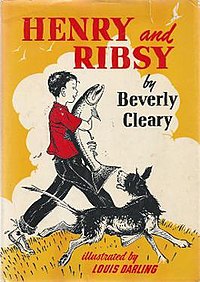
Henry and Ribsy

By Beverly Cleary
HarperCollins
1982
192 pages
Reading Level:  K-3, 4-6
Realistic Fiction


Henry Huggins wants to go salmon fishing with his father; however, Henry's dog, Ribsy, has been a nuisance with the neighbors.  Henry makes a deal with his father.  If Henry keeps Ribsy out of trouble with the neighbors, then he can go fishing with his father.  Keeping Ribsy out of trouble is a lot of work, and Henry has several adventures while doing this such as Ribsy chasing the garbage man and eating a neighbor girl's ice cream cone.

I would rate this book as excellent.  The themes of this book are pet ownership, manners, and conduct.  I think that I would use this book in the classroom as part of a literature circle of an author in which I could have other books written by Beverly Clearly to introduce my students to. 

*Note:  Due to the way the I have my book rating system, I have to amend on the reading level for this book, though as I think that this book is geared more towards third and fourth grade.


Friday, October 19, 2012

Learning Log 3

Donalyn Miller, the author of The Book Whisperer, talks about how her husband carries a book with him everywhere he goes as he is one of those people who can read where ever they are, whether they are on a bus or waiting in the reception room for a doctor's appointment.  Due to the time constraints for instruction that teachers experience in the classroom, the content of this chapter in The Book Whisperer stresses the importance of finding the time for students to read independently throughout the school day. 

There are so many situations that we can find for our students to read besides scheduled independent reading time, which the author lists a few such as classroom interruptions for the teacher, waiting in line for pictures, when students have finished other work , as bell ringers and warm-ups in the morning, and during library time.  When students are using the library, the teacher should help students in setting goals for their use of their library time.  The teacher can aid in this by modeling what is expected of appropriate library time use.  The students should have a purpose in mind of how they are planning on spending this time when they are traveling to the library such as returning, renewing, or reading.  The author found that she was able to find an additional twenty to thirty minutes of independent reading time every day by having her students pick up a book and read during times that may not be full of meaningful instruction.

The author looks at the need for creating a place for her students to read comfortably.  Although she acknowledges that many reading gurus urge the need for a special place to read in the classroom, she is not an advocate of a reading corner as she has developed an attitude of being able to read anywhere she is at and at any free moment.  The author states that independent reading does not need to be a silent time as she feels that there is a need to let students have conversations about the books that they are reading during independent reading as long as the students can keep the noise at a level that will not disturb the other readers in the classroom.


Sunday, October 14, 2012

Joyful Noise: Poems for Two Voices

By Paul Fleischman
Harper & Row, Publishers
1988
44 pages
Reading Level:  4-6
Poetry


Joyful Noise:  Poems for Two Voices is comprised of poems about various members of the insect world.  The poems require two readers, who are to read theme aloud.  I listed this book as a 4-6 grade reading level due to the vocabulary used.

I would rate this book as excellent.  This book could be used as a cross-curriculum tool because of the insect theme.  Social interactions among peers is a must for this book as well.

The Gooch Machine

By Brod Bagert
Wordsong Boyds Mills Press
1997
32 pages
Reading Level:  K-3
Poetry

 
The Gooch Machine contains poems that children will find cute and/or funny along with some wonderful, bright, and colorful illustrations.  The poems are in different styles and lengths, which I think will appeal to most children.
 
I would rate this book as good.  I think that it would be a good addition to have in the poetry section of the classroom library.